Trying Leaves Room for Failure

So many times we accept, "Well, I tried" or "I'll try my best" as an acceptable response. The thing is, by bringing the word try into our vocabulary, we allow ourselves to believe that we may fail, which is absolutely a negative mindset. We can choose to change our negative attitudes into positive ones, but this only works if we are willing to change.


Choice #1: Evaluate Your Present Attitude

This process involves identifying problem feelings, behaviors, and attitudes. It also means clarifying the truth and securing a commitment within ourselves. "What must I do to change?" turns into the thought process of "I must change," which leads to planning and carrying out that choice.


Choice #2: Realize That Faith Is Stronger Than Fear

This isn't necessarily talking about religious faith, but rather faith in yourself and believing from the beginning that you can do it.


Choice #3: Write a Statement of Purpose

This would be a great thing to do as a family so you can work on holding each other accountable to fulfilling that purpose.


a) Write specifically what you desire to accomplish each day. Pick one battle at a time, and for each battle you win, make note of it. As you see your progress, your desire to keep going will grow.


b) Verbalize to an encouraging friend or family member what you want to accomplish each day. Continually use positive statements.


Eliminate the following phrases from your vocabulary:

  • I can't
  • If
  • Doubt
  • I don't think
  • I don't have the time
  • Maybe
  • I'm afraid of
  • I don't believe
  • (Minimize) I
  • It's impossible


Bring these phrases into your everyday speaking:

  • I can
  • I will
  • Expect the best
  • I know
  • I will make the time
  • Positively
  • I am confident
  • I do believe
  • (Promote) You
  • All things are possible


c) Take action on your goal each day.


Choice #4: Have the Desire to Change

When all else fails, desire alone can keep you heading in the right direction.


Choice #5: Live One Day at a Time

It's not the experiences of today that drive people to distraction; it's the remorse or bitterness over something that happened yesterday and the dread of what tomorrow may bring.


Choice #6: Change Your Thought Patterns

We can control our thoughts. Our feelings come from our thoughts. Therefore, we can control our feelings by learning to change how we think.


Choice #7: Develop Good Habits

An attitude is nothing more than a habit of thought. Attitudes are not instincts; they are acquired actions and reactions.


Choice #8: Continually Choose to Have the Right Attitude

You are the only one who can determine what you will think and how you will act. This means that you can make your attitude what you want it to be.

As swimmers mature, coaches seek mindsets of, "I WILL go out and swim my hardest," instead of, "I'll TRY to swim my hardest."

Parents, keep supporting your swimmer no matter what happens in the pool. Take time to sit down and decide what your purpose statement(s) are as individuals and as families. It may be interesting to see what happens!


June 16, 2026
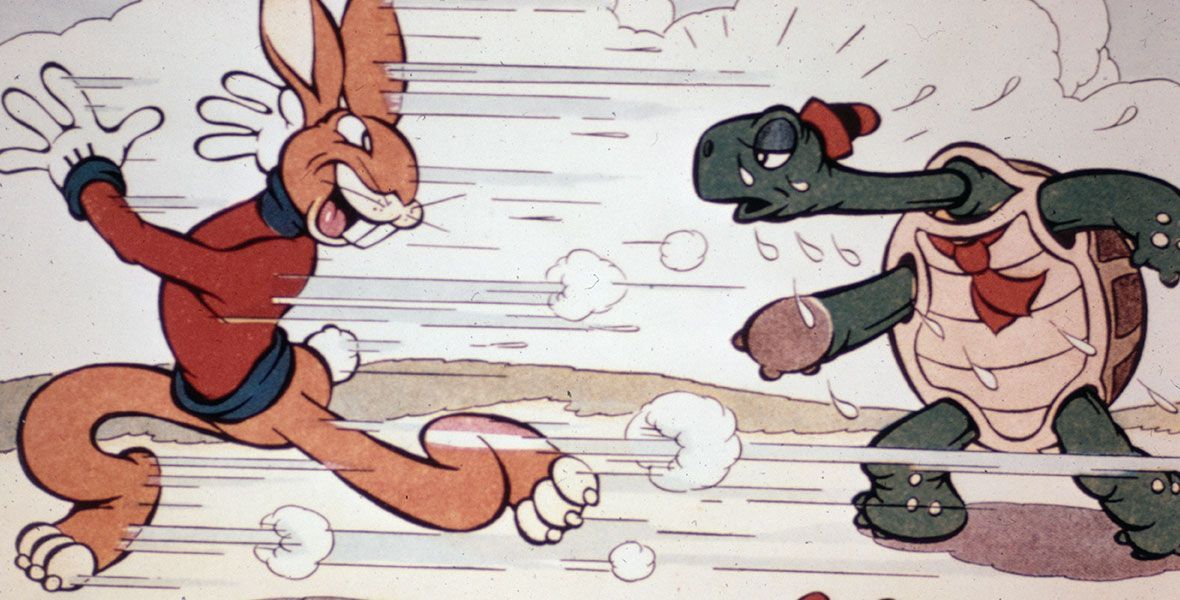
The Tortoise and the Hare: Who Really Won the Race? Most of us grew up hearing the classic story of the tortoise and the hare. A tortoise and a hare argued about who was faster, so they decided to settle the debate with a race. The hare sprinted ahead and quickly built a large lead. Confident he had the race won, he decided to take a nap under a tree before finishing. While the hare slept, the tortoise continued moving forward, slowly but steadily. He eventually passed the sleeping hare and crossed the finish line first. When the hare woke up, he realized he had lost. The moral? Slow and steady wins the race. But what if the story didn't end there? Race #2: Learning From Failure The hare was disappointed. After reflecting on his loss, he realized he hadn't lost because the tortoise was faster. He lost because he was overconfident and careless. So he challenged the tortoise to another race. This time, the hare ran hard from start to finish without stopping. He won easily. The moral? Fast and consistent beats slow and steady. Still, the story wasn't over. Race #3: Play to Your Strengths The tortoise knew he could never beat the hare in a traditional foot race. So he proposed a new course. The hare agreed. The race began, and the hare again raced far ahead until he reached a wide river. The finish line was on the other side. The hare didn't know what to do. Meanwhile, the tortoise arrived, entered the water, swam across, climbed out, and continued to the finish line. The tortoise won. The moral? Identify your strengths and create opportunities that allow those strengths to shine. But even that wasn't the end. Race #4: Better Together By now, the hare and tortoise had become friends. Together, they realized something important: neither of them had performed at their best in the previous race. Instead of competing against each other, they decided to run the course as a team. The hare carried the tortoise to the river. Then the tortoise carried the hare across the water. Once they reached the other side, the hare took over again and carried the tortoise to the finish line. Together, they finished faster than either could have alone. And both felt a greater sense of accomplishment than they had in any of their previous victories. The moral? Individual talent is valuable, but teamwork is powerful. The Bigger Lessons There are several important lessons hidden within this expanded story: Learn from Failure Neither the hare nor the tortoise gave up after losing. The hare responded by working harder and becoming more disciplined. The tortoise responded by changing his strategy. Sometimes success requires greater effort. Sometimes it requires a different approach. Often, it requires both. Play to Your Strengths The tortoise stopped trying to beat the hare at the hare's game. Instead, he found a situation where his unique abilities mattered. Success often comes from understanding your strengths and positioning yourself where those strengths create value. Embrace Teamwork The greatest result came when the hare and tortoise stopped competing and started collaborating. Great teams recognize individual strengths and allow the right person to lead in the right situation. Compete Against the Challenge, Not Each Other The most powerful lesson may be the last one. When the hare and tortoise focused on defeating each other, one had to lose. When they focused on solving the challenge together, everyone won. In life, business, sports, and leadership, we often achieve more when we stop competing against one another and start working together to overcome the obstacles in front of us.  Sometimes the real victory isn't crossing the finish line first. Sometimes the real victory is crossing it together.
June 9, 2026
More Than Swimming: The Brazadas Team Rules
June 2, 2026
Stick With Swimming—What Can a Parent Do? by USA Swimming
By Craig Charlson May 31, 2026
Celebrating One Year of Brazadas
By Craig Charlson May 26, 2026
Rethink College Swimming
By Craig Charlson May 12, 2026
Community Partnership Spotlight: Brazadas and Beardsley School District